
Key Takeaways
- Chronic back pain affects day-to-day living; understanding the underlying reasons for it is key.
- While best known for its cosmetic benefits, liposuction can also treat certain medical conditions. Now, researchers are investigating its use as a treatment for chronic back pain, especially in people who carry excess weight or have fat distribution problems.
- Studies have demonstrated that for certain individuals with back pain associated with conditions such as lipedema, liposuction can offer relief. This condition leads the body to store an excess of fat.
- For many, liposuction offers a promising option. It’s important to talk to healthcare professionals to see if this procedure is for you.
- Patients need to understand how difficult it is to find treatment. They potentially risk needing time to recover and have to commit to lifelong lifestyle changes to keep their results.
- Speak candidly to medical professionals about your options. Exploring everything that’s available can help you find a more customized way to alleviate chronic back pain.
Have you ever wondered whether liposuction can help with chronic back pain?
It sounds shocking, but fat deposits can go wrong, causing problems such as lipedema, which can cause extreme discomfort. Liposuction isn’t just cosmetic; it can help relieve pressure and pain.
I’ve seen a lot struggle with symptoms, such as swelling and tenderness. There are many factors that go into choosing the right treatment for back pain. It’s all weighed heavily against factors like the condition’s severity and the potential risks.
Liposuction holds promise but still necessitates wise choices. Understanding your options can make a world of difference in managing pain and improving quality of life.
Take time to think this through before making a decision.
Understanding Chronic Back Pain
Causes of Chronic Back Pain
When I think about what causes chronic back pain, poor posture and muscle strain are big players.
Picture yourself sitting at a desk all day, hunched over a computer. Over time, this can really mess with your back.
It’s not just about the sitting, of course. Improperly lifting heavy objects can stretch your muscles too much. Even sleeping in an awkward way can cause lingering pain.
Then you have degenerative conditions, like disc herniation and arthritis. These are more serious and typically indicate the spine’s natural cushioning is wearing out, leading to nagging pain. It’s similar to when a cushion goes flat on a chair — you lose that comfort.
Lifestyle factors also come into play. Being overweight puts additional strain on the spine, while sedentary lifestyles lead to muscle atrophy in the back.
It’s a reminder of how connected our bodies are.
Symptoms Indicating Back Pain
Back pain isn’t just a matter of feeling sore. It has its own symptoms, part of the phenomena.
You may experience stiffness that makes bending or moving difficult. An aching sensation is common, and occasionally an associated pain will radiate down your leg, which indicates nerve involvement.
Muscle weakness and numbness in the legs or feet are red flags, too.
These symptoms can make simple tasks, like walking or standing, hard to do. They are often indicators that something’s wrong, and recognizing these changes in mobility and posture is key.
Conditions Leading to Back Pain
Multiple conditions cause back pain.
Herniated discs are common culprits. They occur when a disc bulges out and presses against nerves.
Spinal stenosis is another condition, where the spaces in the spine narrow, squeezing nerves and causing pain.
Muscle atrophy, or the weakening of muscles, especially in the core, can exacerbate back problems. Consider how strong core muscles act as a natural brace for your spine.
Lifestyle diseases, such as obesity and sedentary lifestyles, are often associated with back pain. They impact overall posture and muscle health, resulting in increased pain.
Exploring Liposuction
What is Liposuction?
Liposuction is a procedure that removes excess fat from specific areas of the body. It’s also referred to as lipoplasty or liposculpture and uses suction to achieve the results you want.
It’s kind of like a vacuum pump for fat, going after those pesky pockets that just won’t come off with diet and exercise.
People get liposuction for stubborn fat deposits. Common areas for treatment include the abdomen, thighs, and back.
A growing number of people are interested in using liposuction to ease chronic pain. This technique alleviates some of the strain on the back, especially for those experiencing back pain.
This shift in thinking is pretty exciting and underscores how versatile this procedure can be.
Types of Liposuction Techniques
You’ve got your traditional liposuction, which is the old-school method. It’s effective, but it can be a little harsh on the body.
Then there’s tumescent liposuction, which is a lot gentler. We pump a mix of saline, lidocaine, and epinephrine into the area. This technique lessens pain during fat removal and expedites recovery.
Laser-assisted liposuction is an exciting option that harnesses laser energy to melt fat before suctioning it out. This technique is particularly useful for precision during the removal process.
Each type has its own pros and cons, including recovery time and effectiveness. It all depends on what works best for your body and goals.
Choosing the appropriate one is important to achieve your desired results and ensure a smooth recovery.
Benefits of Liposuction
On the aesthetic side, liposuction can reshape your body, giving you that contour and shape you’ve been dreaming of.
It’s not all about appearances.
A reduction in fat can reduce pressure on your spine, which may reduce your back pain. This can really improve your mobility, too.
Looking good can do wonders for your self-confidence and mental state.
You can maintain the results if you just keep your weight under control.
Most people find they can switch over to regular pain meds after a week or so.
It could take a few weeks before you get back to your regular activities.
You’ll see the payoff with a slimmer-looking body for a few months!
Liposuction and Back Pain Relief
1. How Liposuction Alleviates Pain
Now, let’s discuss how liposuction can help alleviate back pain.
When we talk about losing excessive fat, we want to put less pressure on your lumbosacral spine. This will also relieve strain on your paraspinal muscles.
Consider the impact of wearing a heavy backpack all day; your back starts to fatigue. The same thing is happening when there’s excess fat around your midsection.
Liposuction swoops in to take that fat deposit away, making you feel lighter and free of those uncomfortable bulges.
For example, I recall reading about 40 patients, and 77.5% of them experienced significant pain relief after liposuction. That’s a huge deal!
When we eliminate fat, we also improve body mechanics, which eventually helps us reduce pain.
2. Fat Reduction and Pressure Relief
Now, let’s get into fat reduction and how it alleviates pressure.
Reducing lipedema fat is important for taking the load off your nerves and joints.
Liposuction targets these fat deposits, which may relieve symptoms associated with spinal issues.
The beauty of liposuction is that it’s not just about aesthetics; it can actually improve your overall health.
Losing body weight is a game changer for managing chronic back pain.
I know you might be wondering how it’s done.
The procedure uses small cannulas and local anesthesia, so there’s really no pain.
Plus, the results are pretty much permanent, which is a huge win.
3. Improved Mobility After Liposuction
Let’s talk about mobility a bit here. Liposuction can also be a game changer. By eliminating some of the restrictions that come with fat, you move more freely.
I have seen people who, after liposuction, find it easier to participate in physical activities. This uptick in activity is not only beneficial to recovery; it’s crucial for preserving mobility.
Keeping what pain you have at bay in the future requires regular exercise.
Once the swelling goes down, which can take weeks or even months, you’ll start to see the full results of the procedure. Please be patient as your body heals!
4. Psychological Benefits of Pain Relief
Finally, let’s talk about the psychological benefits.
Easing back pain can work wonders for mental wellbeing.
Physical comfort often means a better quality of life.
When you’re not in pain, your confidence improves, and you are more motivated to do healthy things.
You feel more like your old self, and that feels great.
The procedure can be done on an outpatient basis, so you will be able to resume work quickly.
This prevents your life from being turned upside down.
Lipedema and Back Pain
Understanding Lipedema
Lipedema is a chronic condition that mostly affects women. It causes abnormal fat distribution, typically to the legs and sometimes the arms. This condition is characterized by swelling, tenderness, and disproportionate fat buildup.
However, lipedema fat is different from regular weight gain. It even resists diet and exercise, making it a stubborn and difficult condition to overcome.
Lipedema is common among women, significantly affecting body image and self-esteem, often creating an important psychosocial burden.
As a result, early diagnosis and intervention are crucial for effective management, preventing progression, and alleviating symptoms.
How Lipedema Causes Back Pain
The extra weight from stored fat creates intense pressure on your body.
This pressure leads to chronic back pain for those who have lipedema.
This extra weight can place pressure on the lumbar region and spinal structures, contributing to chronic discomfort.
The inflammation that accompanies lipedema increases the pain, and conventional pain management techniques fall short of providing relief.
Poor posture, often as a result of body mechanics changing with lipedema, adds to the chronic discomfort.
Too much fat builds up, which can make the knees knock inward or drop to the side. This can impact your ability to walk as well as create back strain.
Treatment Options for Lipedema
A number of treatment options can help manage lipedema and reduce back pain.
Such conservative therapies include compression garments and lymphatic drainage massages to decrease swelling and improve circulation.
For many patients, liposuction has become an option to surgically treat the disease, relieving them of their symptoms.
In a study by Dadras et al., patients experienced a significant reduction in tension. They also reported improved scores for movement after having liposuction.
However, it is important to note that liposuction can have side effects, like temporary methemoglobinemia and bruising.
A multidisciplinary approach is key when it comes to treating lipedema and its associated pain. This means healthcare professionals from all disciplines working together to address the physical and psychosocial components of the disease.
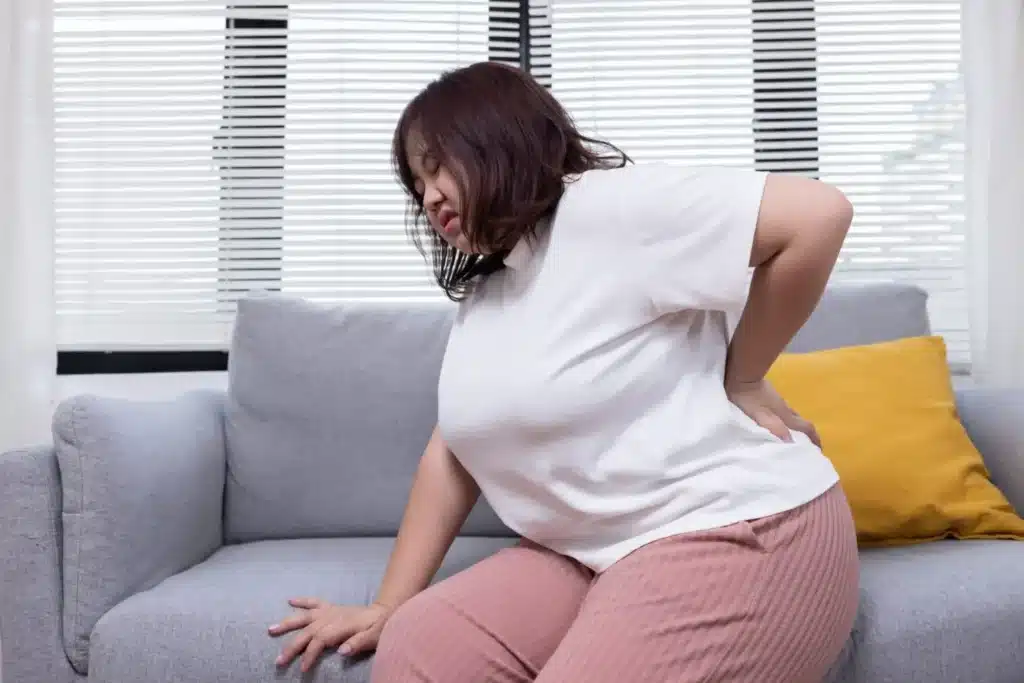
Challenges in Seeking Treatment
Risks of Liposuction for Back Pain
Let me talk risks. Liposuction is no picnic.
You have potential complications like infections and scarring. These can occur if the procedure is not performed properly or if post-surgery care is not followed.
Another thing worth mentioning is that anesthesia, something we’re accustomed to think of as a sure thing, comes with its own risks. Much depends on the type and amount of anesthesia, and selecting a qualified surgeon is really important.
There’s the risk of inconsistent results.
You imagine that you’ll end up with this perfect shape, and sometimes it doesn’t quite turn out like that.
It’s about knowing what’s realistic and what can actually be done.
Manage expectations? Yeah, it’s a big deal.
Considerations Before Undergoing Surgery
A rigorous medical assessment is key. This means asking a lot of questions about your medical history to ensure you’re a suitable candidate for surgery. There are folks who aren’t made for this stuff, right?
That’s one thing, setting realistic goals.
Knowing the recovery process can prepare you for what comes next.
You want someone who’s got real experience with liposuction, especially for something as specific as back pain.
You want the surgeon who actually knows liposuction. They need to understand its nuances, particularly as it relates to soothing chronic back pain.
Post-Surgery Recovery and Care
Recovery after surgery is a mixed bag. You’ll usually be looking at a timeline where healing takes multiple weeks.
It’s similar to having a roadmap for recovery, and if you follow these post-operative care instructions, you will be on track.
It’s critical for proper healing.
Light physical activity and staying hydrated are essential in promoting recovery.
Staying active helps, but it has to be light, nothing too intense.
Drink water, lots of it. That keeps everything running as it should.
Conclusion
Liposuction isn’t only about the appearance. It’s a miracle for back pain. People with lipedema or excess weight get relief. They stand taller and move easier.
Liposuction can alleviate the pain, but it’s not a panacea. It requires a lot of thought. A chat with a doc helps. They know best. They guide you on risks and benefits.
So liposuction is promising. It gives hope in response to pain. It’s a step to a pain-free life.
Prepared to find out additional information or get started? Dig into the research, speak with experts, and see what your options are. Your back deserves the best of the best. Take control and find out if liposuction is your answer to relief.
Frequently Asked Questions
Can liposuction help relieve chronic back pain?
Liposuction is not usually performed to treat chronic back pain. It’s primarily for fat removal. Check with a doctor about ways to treat back pain.
How does liposuction relate to back pain?
Liposuction can indirectly relieve back pain by helping you lose excess weight. Less weight can help take pressure off the spine, providing some relief.
Is lipedema related to back pain?
Yes, lipedema can contribute to back pain. The condition causes fat buildup, which stresses the musculoskeletal system. Treatment can help relieve discomfort.
What are the challenges in seeking liposuction for back pain?
Its challenges include misdiagnosis, cost, and recovery time. Liposuction is primarily cosmetic. You definitely want to check if it’s right for your condition.
Are there alternative treatments for back pain relief?
Options are like physical therapy, medication, and lifestyle changes. Consult a specialist to discover which might be the best treatment for you.
Is liposuction effective for lipedema?
Liposuction may be effective for lipedema. It removes extra fat, which can reduce weight-related pain. Talk to a specialist for specific guidance.
What should I consider before opting for liposuction?
Think about your overall health, financial costs, and recovery time. It is important to speak to a surgeon who has been certified about risks and benefits.